
 inglés
 francés
 español
 ruso
ruso coreano
 Japonés japonés


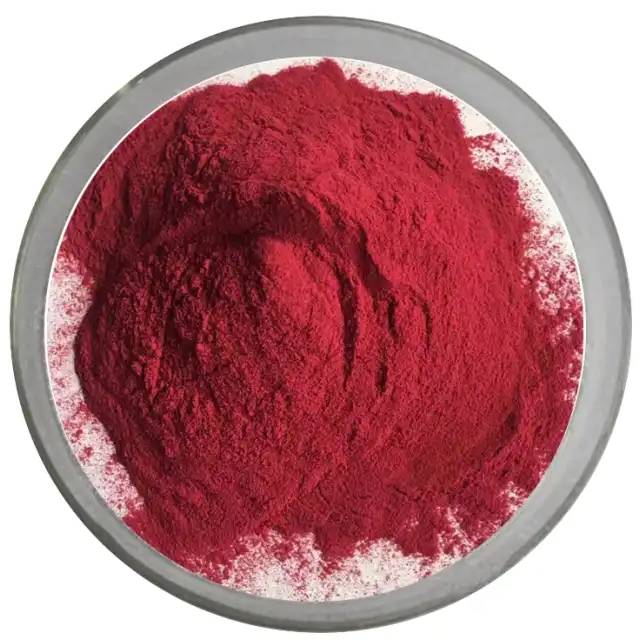
Feed-Grade Chromium Picolinate Powder
CAS No.: 14639-25-9
Assay: ≥ 12.0% Active Trivalent Chromium
Testing Method: Atomic Absorption Spectrophotometry (AAS)
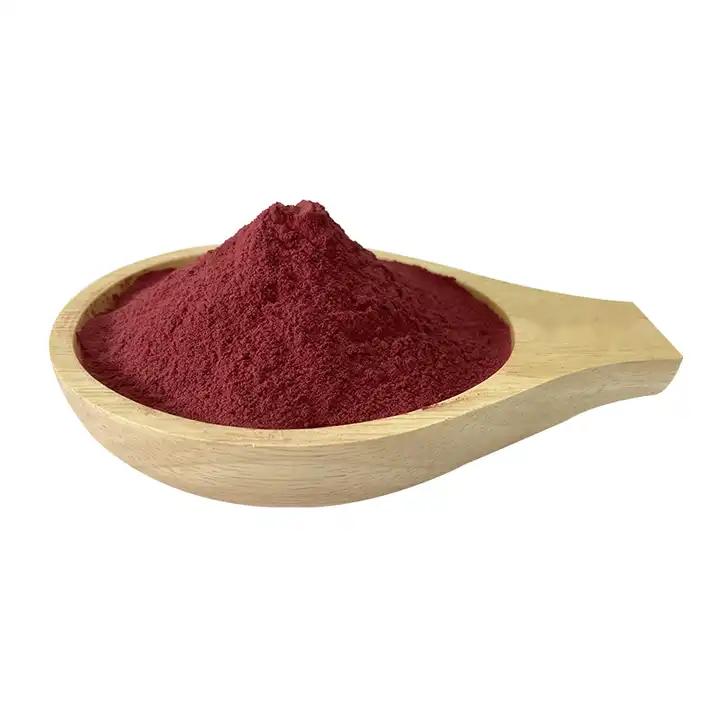
Appearance: Reddish-purple Free-Flowing Crystalline Powder
Free Picolinic Acid: ≤ 1.0%
Mesh Size: Minimum 95% through 80 mesh
Bulk Density: 0.55 – 0.70 g/mL
Loss on Drying: ≤ 4.0%
Certificate: BRCGS, IFS, Halal, Kosher
Sample: 10-50g Free Sample Available for R&D
- descripción
- Hoja de datos
-
What Is Feed-Grade Polvo de picolinato de cromo?
Feed-Grade Chromium Picolinate Powder is an organochromium complex synthesized via the coordinate combination of trivalent chromium with picolinic acid ligands. The molecular architecture yields an exceptionally high bioavailability profile, functioning as an active core micronutrient matrix to optimize carbohydrate and lipid metabolism across swine, poultry, and ruminant feeding campaigns.
Advanced industrial coordination chemistry guarantees the active trivalent chromium content maintains a minimum concentration of 12.0% calculated strictly on a dry-basis. Testing protocols utilize certified Atomic Absorption Spectrophotometry (AAS) to verify metal ions binding efficiency, fully satisfying global feed safety regulations and AAFCO compliance standards.
The thermochemical stability profile limits chemical degradation during high-temperature pelleting, protecting compounding matrices under intensive feed mill extrusion parameters. Designed with a stable tapped bulk density of 0.55 g/mL to 0.70 g/mL, the powder optimizes blend flowability and effectively eliminates micro-dosing segregation inside automated hopper lines.
especificación
Nombre del producto
Feed-Grade Chromium Picolinate Powder
CAS No.
14639-25-9
Ensayo ensayo ≥ 12.0% Active Trivalent Chromium (Calculated on Dry Basis) Método de ensayo Atomic Absorption Spectrophotometry (AAS)
Free Picolinic Acid ≤ 1.0% apariencia
Reddish-purple free-flowing crystalline powder
Odor & Taste Bland, characteristic odor profiling Mesh Size Minimum 95% through 80 mesh Bulk Density (Tapped) 0.55 – 0.70 g/mL, under USP <616> Method I Loss on Drying ≤ 4.0% ; Vacuum Oven (105°C, 4 Hours) per USP <731> Ash (Residue on Ignition) ≤ 0.5% ; Muffle Furnace (550°C) per USP <281> pH Value (10% Solution) 3.5 – 6.0 ; Potentiometric pH Meter Heavy Metals Pb ≤ 0.5 ppm, As ≤ 0.5 ppm, Cd ≤ 0.1 ppm, Hg ≤ 0.1 ppm ; USP <233> (ICP-MS) Microbiological Control TPC ≤ 1,000 cfu/g; Y&M ≤ 50 cfu/g; E.Coli: Neg/10g; Salmonella: Neg/25g ; USP <61>/<62> Standard Allergen Status Soy-Free, Gluten-Free, Nut-Free Compliance ; 100% Allergen-Free Matrix Regulatory Status 100% Non-GMO & Irradiation-Free ; ETO-Free & Nanomaterial-Free Compliance ¿Busca un presupuesto?Póngase en contacto con nosotrosRequest a Custom QuoteQuality & Compliance
Coordinate Homogeneity Verification: Analytical chemistry workflows verify the structural uniformity of the crystalline matrix across all production lots utilizing verified AAS and HPLC protocols, ensuring the active trivalent chromium concentration and picolinate ligand ratios directly align with international feed supplement standards.
Certified Manufacturing Environment: The automated coordination synthesis lines and particle-engineering infrastructure operate under continuous independent monitoring, maintaining active FAMI-QS, ISO 22000:2018, Halal, and Kosher factory safety system certifications.
Regulatory Filing Traceability: Global market access and administrative transparency are secured via verified regulatory filings, backed by active FDA Food Facility Registration data under Green Spring Technology to ensure batch manufacturing records clear international quality assurance audits.
Allergen Isolation Protocols: Continuous dry-processing lines enforce strict multi-line isolation barriers to eliminate cross-contamination and ingredient crossover, ensuring finished commercial cargo lots fully comply with a 100% Soy-Free, Gluten-Free, and Nut-Free allergen-free matrix.
Elemental Impurity Verification: Mass spectrometry screening utilizes validated ICP-MS analysis per USP <233> to monitor absolute trace elemental impurities, executing mandatory lot release gates that guarantee strict compliance with heavy metal limits of Pb ≤ 0.5 ppm, As ≤ 0.5 ppm, Cd ≤ 0.1 ppm, and Hg ≤ 0.1 ppm.
Microbiological Safety Release: Industrial microbiology control systems execute validated USP <61>/<62> protocols prior to shipment, guaranteeing batch conformity to strict limits of TPC ≤ 1,000 cfu/g, Y&M ≤ 50 cfu/g, and verified absence of Escherichia coli and Salmonella.
Biosecurity & Clean Certification: Comprehensive verification screening protocols confirm the complete exclusion of modern agricultural processing hazards, providing certified batch-level traceability for a matrix that is entirely 100% Non-GMO, Irradiation-Free, ETO-Free, and Nanomaterial-Free.

Key Advantages
Thermochemical Pelleting Stability: The organometallic coordination crystalline structure possesses excellent heat resistance, protecting the active trivalent chromium matrix against thermal degradation during high-temperature feed mill compression and intensive extrusion processing.
Anti-Segregation Bulk Density: Controlled strictly within a tapped range of 0.55 to 0.70 g/mL under USP <616>, the powder physical mass profile perfectly matches mainstream feed carrier grains, completely eliminating fine-fraction percolation segregation inside automated hopper lines.
Particle-Size Hydrodynamic Synchronization: Engineered with a uniform granular morphology ensuring minimum 95% passing through 80 mesh (≤ 177 μm), the particle kinetics secure excellent blend flowability and eliminate chemical stratification risks during large-scale pneumatic transport runs.
Moisture Agglomeration Resistance: Restricting total Loss on Drying to ≤ 4.0% via USP <731> cuts off the capillary liquid bridges required for particulate cohesion, effectively preventing cold-flow sintering or hard caking during long-term maritime container transit environments.
Advanced Analytical Purity Assurance: Strict manufacturing protocols confine residual free picolinic acid to ≤ 1.0% verified by HPLC, eliminating acidic core variables to block complex Maillard browning reactions and secure total stability inside high-performance animal feeds.
Applications
Swine Pre-Mix compounding: Functions as a highly homogenized micronutrient core in vitamin-mineral pre-mixes, matching the 0.55–0.70 g/mL tapped density to prevent particle segregation inside industrial ribbon blenders and guarantee consistent dose delivery in lactating sow rations.
Poultry Pellet Feeds: Incorporated smoothly into broiler and layer mash formulations prior to conditioning, relying on its high thermochemical pelleting stability to withstand intensive mechanical conditioning and dies extrusion temperatures without active molecule structural degradation.
Aquaculture Extruded Feeds: Integrated into high-protein shrimp and carnivorous fish sinking or floating feeds, utilizing its narrow minimum 95% through 80 mesh (≤ 177 μm) particle profile to ensure uniform distribution within dense micro-pellet formulation matrices.
Ruminant TMR Stabilizers: Applied as a moisture-stable chromium matrix in Total Mixed Ration (TMR) compound blocks, where the controlled Loss on Drying ≤ 4.0% eliminates liquid bridging, preventing premature block crumbling or nutrient degradation under humid farm environments.
Pet Food Stick Packs: Deployed as an identity-verified active component in clean-label veterinary supplements and companion animal functional treats, leveraging the 100% Allergen-Free and Soy-Free status to satisfy strict grain-free premium brand formulation architectures.

Technical FAQ
Q1: Why must formulation engineers prioritize Standardized Trivalent Chromium Picolinate Complex over inorganic chromium sources to prevent micronutrient stratification in swine pre-mix lines?
A1: Micro-dosing generic crystals risks severe concentration variance due to gravitational segregation. This specialized Feed-Grade Chromium Picolinate Powder locks the tapped density to 0.55 to 0.70 g/mL under USP <616>, matching grain-carrier masses perfectly to prevent fine-fraction percolation segregation inside industrial ribbon blenders and guarantee dose uniformity.
Q2: How does the thermochemical architecture of this 12% Chromium Picolinate Micronutrient Premix successfully withstand mechanical shear and high thermal stress during poultry pellet feed extrusion?
A2: Standard organic compounds suffer structural cleavage under intense conditioning heat. The coordination crystal grid of this Standardized Trivalent Chromium 12% Feed Product is molecularly engineered to withstand conditioning temperatures exceeding 85°C without ligand dissociation, maintaining a minimum active trivalent chromium base of 12.0% as verified by batch-specific AAS analysis.
Q3: What analytical protocol verifies the coordination bonding inside this Chromium Picolinate Feed Supplement Grade Matrix and blocks moisture-driven Maillard browning inside aquaculture feeds?
A3: Quality assurance lot release enforces reversed-phase HPLC analysis to map structural stability and eliminate unbound reactive molecules. This testing framework acts as a mandatory safety gate to restrict the critical threshold of residual free picolinic acid to ≤ 1.0%, effectively blocking complex Maillard browning reactions and physical caking under high humidity.
B2B Sourcing & Global Supply Capabilities
Annual Capacity: The manufacturing facility maintains a verified annual output of 45 Metric Tons (MT) for crystalline organometallic matrices, ensuring long-term contractual volume security for enterprise-level feed mill production pipelines.
Industrial Packaging: Cargo is securely dispatched in standard 25 kg fiber drums equipped with high-density, tamper-evident, double-layer food-grade polyethylene inner linings to eliminate moisture ingress during transit.
European Logistics Hub: A rolling safety stock is perpetually staged at the centralized hub in Paris, France, securing rapid overland fulfillment within 48 to 72 hours across major European manufacturing zones.
In-House Laboratory Infrastructure: An independent R&D laboratory operations facility functions on-site, executing lot-specific HPLC and ICP-MS analysis to deliver real-time matrix verification and automated analytical data alignment.
Flexible Factory MOQ: To facilitate pilot-scale formulation trials and clinical batch runs, the plant provides an agile manufacturing minimum order quantity starting at 1 kg with factory-direct pricing.
Customs Clearance Support: The compliance division issues complete regulatory dossiers to accelerate trans-border customs clearance and clear stringent quality assurance audits, mitigating international supply chain bottlenecks.
Complimentary Sample Program: Technical validation samples ranging from 10g to 50g are dispatched from stock for immediate bench-scale flow kinetics and volumetric tapped bulk density testing.
-
Download Data Sheet: COA, TDS, MSDS Please fill in the form below to receive the full technical documents via email.